

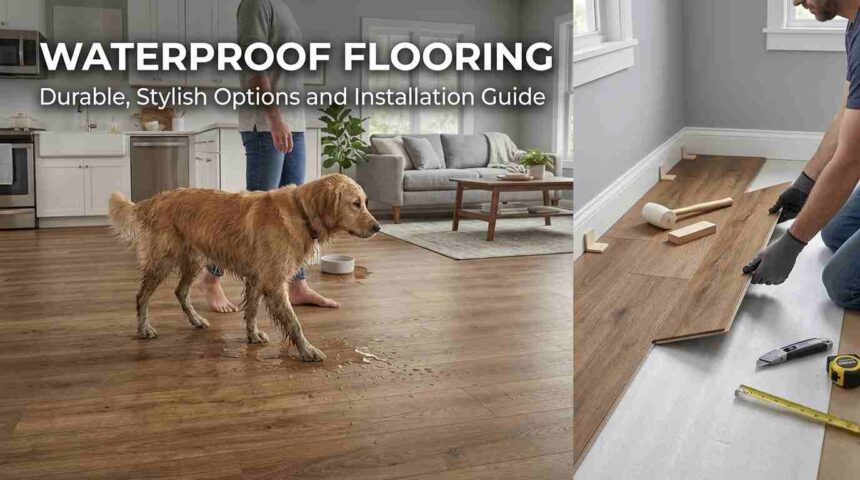
You want flooring that stands up to spills, humidity, and heavy use without sacrificing style. Waterproof options—like vinyl plank, rigid core, and specially engineered laminate—give you that protection while fitting kitchens, bathrooms, basements, and busy living areas.
Choose waterproof flooring when you need durable, low-maintenance surfaces that resist prolonged moisture and still look like real wood or tile. This guide will walk you through the common types, how installation affects performance, and what maintenance keeps your floors looking their best so you can pick the right product for your home.
Types of Waterproof Flooring
You’ll find options that handle standing water, resist humidity, or survive occasional spills. Choose by room use, subfloor condition, and how much water exposure you expect.
Vinyl Plank and Tile
Vinyl plank (LVP) and vinyl tile (LVT) provide fully waterproof wear layers and a rigid or flexible core that prevents water from passing to the subfloor.
You can install click-lock or glue-down systems; click-lock works well over existing floors while glue-down gives a more permanent, seamless result.
Benefits include wide style variety that mimics wood or stone, low maintenance, and good dent and stain resistance.
Watch for cheaper thin vinyl that telegraphs subfloor imperfections and cheaper cores that can warp under extreme heat. Look for commercial-grade wear layers and a waterproof core (WPC or SPC) for high-traffic or wet areas.
Porcelain and Ceramic Tile
Porcelain and ceramic are inherently water-resistant because the body material absorbs minimal moisture and glazed surfaces shed water.
Use cement backer board or a proper waterproof membrane during installation to keep water from reaching the subfloor or framing.
Porcelain tolerates freeze-thaw cycles and high temperatures, making it suitable for unheated garages and sunrooms.
Expect higher installation cost and longer downtime; grout lines need sealing or use epoxy grout to reduce staining and water penetration. Tile is durable but can feel cold and hard underfoot without underfloor heating or area rugs.
Engineered Hardwood
Engineered hardwood pairs a real hardwood veneer with a plywood or HDF core that improves dimensional stability compared with solid wood.
Select products labeled water-resistant or waterproof and ensure the core is specifically designed to resist moisture.
Engineered hardwood withstands humidity changes better than solid planks, so it suits kitchens and basements with controlled moisture.
Avoid prolonged standing water; seams and edges can delaminate if water sits for long periods. Install with a floating click system or glue-down per manufacturer instructions and maintain humidity between 35–55% to minimize movement.
Laminate with Water-Resistant Core
Modern laminate with a water-resistant core uses sealed edges and treated HDF to slow water penetration.
These products are not uniformly waterproof; check for full waterproof labeling and enhanced edge seals if you plan to use them in bathrooms or basements.
Laminate offers a durable wear layer and a realistic photographic surface at a lower price than some engineered hardwoods.
Expect potential swelling at compromised seams; install with proper underlayment and tight seam sealing, and avoid submersion or rooms prone to frequent standing water.
Installation and Maintenance Considerations
Get the subfloor flat and dry, plan for drainage or a moisture barrier where needed, and follow a routine cleaning schedule using manufacturer-approved products.
Subfloor Preparation
You must ensure the subfloor is level within manufacturer tolerances—typically no more than 3/16 inch variation over 10 feet for most waterproof planks. Use a straightedge to check high and low spots, then grind high areas or apply a cementitious leveler to low areas.
Verify the subfloor is structurally sound: secure loose boards, replace delaminated plywood, and confirm joist spacing meets the floor type requirements. For floating installations, install an underlayment recommended by the manufacturer to reduce telegraphing and improve acoustics.
Measure and remove any contaminants like paint, adhesive residue, oil, or mold. Maintain ambient jobsite conditions—keep temperature and relative humidity in the range the product specifies for at least 48 hours before and after installation to prevent dimensional issues.
Cleaning and Care Practices
Sweep or vacuum regularly with a soft-brush attachment to remove grit that scratches the wear layer. Use a damp mop and a pH-neutral cleaner approved by the flooring maker; avoid abrasive scrubbers, steam mops, and wax-based products that can damage finishes.
Attend to spills quickly: blot liquids and rinse the area, then dry with a soft cloth to prevent standing moisture at seams or transitions. Place protective pads under furniture legs and use entry mats at exterior doors to capture sand and grit.
Follow the manufacturer’s maintenance schedule for periodic deep cleaning and reapply recommended sealers only if your product specifies it. Keep high-traffic areas monitored for wear and repair minor edge lifts or seam separations promptly.
Moisture Barrier Requirements
Test subfloor moisture using a calcium chloride test or in-situ relative humidity probe as specified by the flooring manufacturer. Acceptable moisture limits vary by product—get the exact numbers from the technical datasheet before installing.
Install a vapor retarder or waterproof membrane when subfloor readings exceed limits or when installing over concrete slabs, especially in below-grade or slab-on-grade situations. For floating waterproof floors, remember they resist surface water but do not fix hydrostatic pressure or active leaks; address source water first.
Seal perimeter gaps and transitions according to guidelines: use approved caulk or transition profiles where moisture can intrude, and follow the specified expansion gap dimensions to allow for thermal movement without compromising the barrier.